
You don't need to know how every decoration method works. You need to know which one fits your order, and that comes down to five things: how many pieces, how many colors, what fabric, where the design goes, and when you need it.
The short answer
- Screen printing for larger runs of the same design, especially with a few solid colors, an exact Pantone, or specialty inks. Starts at 24 pieces.
- DTG for small runs of detailed, full-color art on cotton, or several different designs in one order. Starts at 6 pieces.
- DTF for full color on small runs, on polyester and performance fabric, and in awkward spots like sleeves, hat fronts and inside-neck tags. Starts at 6 pieces and has the fastest turnaround.
- Embroidery for a premium, textured logo on polos, hats, jackets, bags and fleece. Starts at 12 pieces.
The five questions that decide it
1. How many pieces?
Every method has setup work before the first piece, and that setup is divided across your order. Screen printing has the most, because each ink color needs its own screen. That's why it gets cheaper per piece as quantity grows.
DTG and DTF don't use screens, so 6, 12 or 30 pieces stay reasonable. We usually recommend DTG for 100 pieces or fewer. When one simple design repeats across a lot of shirts, screen printing usually wins on cost per piece.
2. How many colors, and how exact?
In screen printing, every color is a separate screen, so a one-color logo is simple and a ten-color illustration is not. Screen printing is also the method for exact brand color: it can match over 2,000 Pantone colors and offers specialty inks like metallic shimmer, puff, stretch and UV-reactive.
DTG and DTF print in CMYK, the same four-color system as most printers. They handle photos, gradients and detailed illustrations without any extra setup per color, but they aren't built for exact Pantone matching. If a precise match matters, tell us and we'll run samples to get as close as possible.
Embroidery has its own palette of over 400 thread colors. Most brand colors land on a very close shade, but thread can't blend into gradients.
3. What's the fabric?
People often skip this one, and it can rule a method out entirely.
- 100% cotton tees: screen printing, DTG and DTF all work well. DTG is at its best here.
- Polyester, blends and performance wear: DTF is usually the easiest route. DTG doesn't bond well to polyester. Screen printing on performance fabric is possible, but on smaller runs the setup can push the cost past DTF.
- Polos, hats, jackets, bags and fleece: embroidery is the classic choice, and DTF covers full-color logos on the same items.
4. Where does the design go?
A left chest and a big back print suit any printing method. Sleeves, hat fronts, bag panels, swimwear and inside-neck printed tags are harder to reach, and that's where DTF shines. The transfer is pressed exactly where it needs to go.
5. When do you need it?
Typical turnaround, counted from when your garments arrive and you approve the mockup:
- DTF: 3–5 business days, with a 48-hour rush available
- DTG: 7–10 days
- Embroidery: 7–14 days
- Screen printing: 10–21 days, with most jobs done in 10–14
If your date is tight, say so in your first message; it can change which method we recommend.
Each method, up close
Screen printing
Ink is pushed through a mesh stencil, one screen per color, then cured in a dryer. The result is bold, durable and consistent, even on orders in the thousands.
It's the right call for team shirts, uniforms and merch drops where one design repeats. The Naughty Coffee tees are a good example: one white ink, a 3.5-inch left chest and an 11.5-inch back on an AS Colour 5082 faded tee. On the 4MOM "Don't Forget To Call Your Mom" tees, white puff ink rises in the dryer into soft, raised letters, a specialty ink you only get with screen printing.
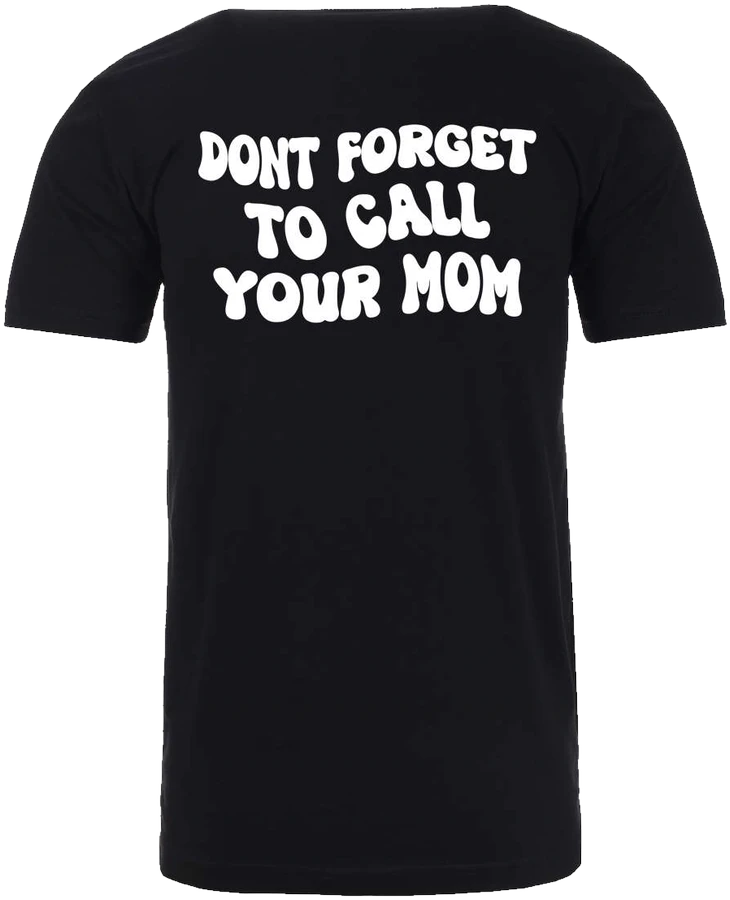
Minimum 24 pieces. More on screen printing.
DTG (direct to garment)
DTG works like an inkjet printer for fabric. The shirt is pretreated, dark garments get a white base layer, and then the full-color art prints straight onto the fibers and is heat cured. There are no screens, so switching between designs adds no significant setup.
It's ideal for photo-quality art, small event runs, samples, and names or numbers. The ATW Off-Road "Forged Series" tee carries a glowing, photographic tire graphic on a black Next Level 3600. As a screen print, that much color and shading would cost more in screens than a small run is worth.
On a white cotton shirt, DTG soaks in and you can barely feel it. It isn't a fit for polyester, and there are no specialty effects. Minimum 6 pieces. More on DTG printing.
DTF (direct to film)
Your design is printed in full color onto a film, coated with adhesive powder and cured, and then we heat press it onto the garment in our Miami shop. Nothing is cut, so there's no weeding, and fine detail and gradients come through cleanly.
DTF sits on top of the fibers, so it has a little more feel than DTG on a white tee. In exchange, it goes almost anywhere: cotton, polyester, blends and performance fabric. The Neo Wash auto spa polos got a full-color left chest and back on a performance pique polo. The Brawlerz Box "Graffiti Palms" tees carry full-color graffiti and sunset palm prints, front and back.
Minimum 6 pieces, 3–5 business days, 48-hour rush available. More on DTF transfers.
Embroidery
Your logo is digitized into a stitch file, then sewn in thread on the Tajima machines in our Miami shop. It reads as premium, has real texture, and holds up for years without fading.
Cost depends mostly on stitch count, so a big filled-in back logo costs more than a small left chest. The Strength Culture zip hoodies pair a 3.36-inch left chest with a 9-inch back logo in M1801 Super White and M1593 Blue Macaw thread. On hats, 3D puff raises the lettering over a layer of foam.
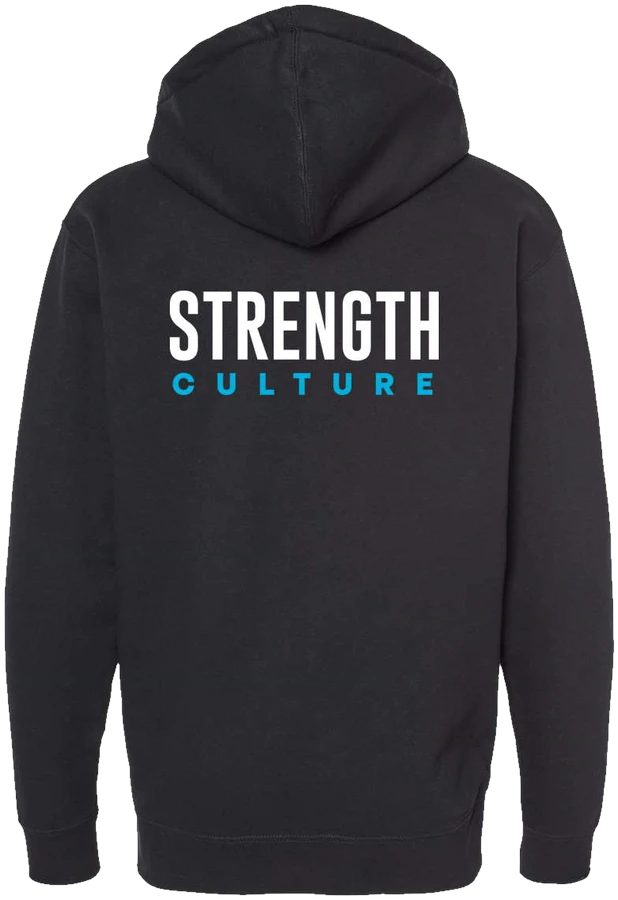
Minimum 12 pieces. More on custom embroidery.
Patches and other options
Patches give a hat or bag a dimensional logo: embroidered, leather (laser engraved or debossed), or molded PVC and silicone, which hold fine detail embroidery can't at small sizes. We also heat press flock vinyl for a soft, velvety finish, like the lettering on The Yacht Edit crewnecks. More on patches and specialty decoration.
How real requests usually land
- "48 tees for our gym, one-color logo front and back." Screen printing. One design, simple art and enough pieces to spread the setup.
- "10 shirts with a full-color illustration, needed in two days." DTF with the 48-hour rush.
- "20 performance polos for a boat crew." DTF for a full-color logo, or embroidery for a classic stitched look.
- "36 dad hats with a simple logo." Embroidery. If the logo has gradients or tiny detail, we may suggest a DTF logo or a patch instead.
- "40 white cotton tees with several different designs." DTG. Each new design adds no significant setup.
A note on durability
On light shirts, screen prints and DTG fade a little over time but stay readable for the life of the shirt. On dark shirts, any printed method can eventually crack. Very thin lines go first, and very large solid areas can spider-web from folding in the wash. If your shirts need to last, tell us up front; there are ways to build a print for durability.
Still deciding?
Send us the garment, the quantity, your art and your date. We'll recommend a method and explain why, and if two methods would both work, we'll tell you what each would cost. We've been decorating apparel in Miami since 2016, across more than 10,000 projects.
You can also see fabrics, ink colors and thread colors in person at our Miami shop; just give us a heads-up first. Get a quote or chat with us.
Quick answers
Which method makes sense for a small order?
Usually DTF or DTG, since neither needs screens. Both start at 6 pieces. With a multi-color logo and a small quantity, DTF is very often the most economical choice. Screen printing starts at 24 pieces and gets more cost-effective as quantity goes up.
Can you decorate polyester and performance shirts?
Yes. DTF is usually the easiest route on polyester, blends and performance fabric. DTG does not bond well to polyester. Screen printing on performance fabric is possible, but on smaller runs the setup can make it cost more than DTF.
Which method is fastest?
DTF. It typically takes 3 to 5 business days once your garments arrive and you approve the mockup, and a 48-hour rush is available.
Can you match my exact Pantone color?
Screen printing can match over 2,000 Pantone colors. Embroidery has over 400 thread colors, so we pick the closest shade. DTG and DTF print in CMYK, so exact matches are harder; if it matters, we can run samples to get as close as possible.
Can I mix methods in one project?
Yes. Plenty of projects pair embroidered hats or polos with printed tees. Choose your thread color first, then use the Pantone tied to that thread for the prints so the colors line up.